Best Schools in South-West Delhi for Co-curricular Activities (2027 Guide)
Sep 29, 2026
Looking for the best schools in South Delhi for extracurricular activities? Explore our 2027 guide on top schools offering sports, performing arts, robotics, and holistic growth.
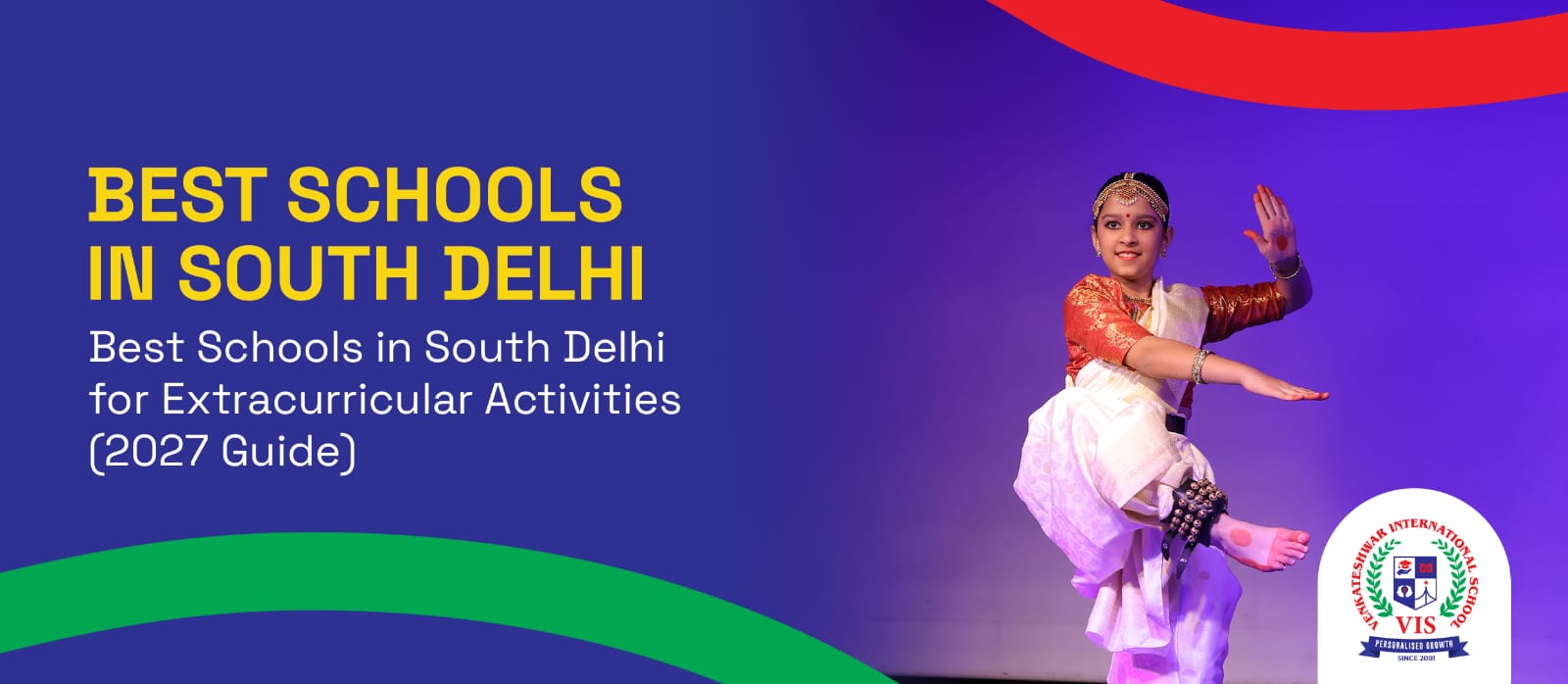
A school's co-curricular program can have a major role in developing skills that classroom learning alone may not fully provide. Sports can build discipline and teamwork, while music, dance, drama, debating and skill clubs can strengthen creativity, confidence and communication.
For parents comparing best schools in South West Delhi or elsewhere in Delhi, co-curricular activities should therefore be evaluated alongside academics, faculty and infrastructure.
A strong program should offer regular participation, trained instructors, suitable facilities and opportunities for students to compete, perform and explore their interests throughout the academic year.
Key Benefits of Co-curricular Activities
- Builds teamwork and discipline: Sports and group activities teach students how to collaborate, follow routines and take responsibility.
- Develops creativity: Music, dance, theatre, art and other creative activities provide opportunities for expression.
- Improves communication: Debate, quiz, public speaking and similar activities can improve confidence and presentation skills.
- Encourages leadership: Student-led clubs, events and competitions can help learners take initiative and manage responsibilities.
- Supports holistic development: A balanced school experience gives students opportunities to develop beyond academics.
What Makes a School Strong in Co-curricular Activities?
A school should not be judged simply by the number of activities mentioned on its website or prospectus. Parents should look at the depth, consistency and accessibility of those activities.
Here are the most important factors to consider when comparing schools.
1. Sports Infrastructure
Look for dedicated facilities that allow students to participate regularly rather than only during annual sports events.
Depending on the school, this may include:
- Indoor and outdoor sports facilities
- Courts and playing fields
- Dedicated spaces for physical education
- Structured sports practice
- Opportunities for participation in competitions
A well-planned sports program can help students develop fitness, discipline and teamwork.
2. Performing Arts Opportunities
Performing arts can play an important role in developing confidence and creativity.
Parents can check whether the school provides opportunities in areas such as:
- Music
- Dance
- Drama and theatre
- Stage performances
- Cultural events
The consistency of these activities is often more important than the number of options listed.
3. Clubs and Student Societies
Clubs allow students to explore interests outside their regular academic subjects.
Common examples include:
- Debate clubs
- Quiz clubs
- Literary activities
- Public speaking
- Technology and innovation clubs
- Cultural societies
A good school gives students opportunities to participate rather than keeping clubs limited to a small group of students.
4. Coaching and Mentorship
The quality of instruction matters. Parents should ask whether cocurricular programs are supported by specialized coaches, instructors or mentors.
For sports in particular, structured coaching can make a significant difference in helping students improve their skills over time.
5. Inter-School Exposure
Participation in inter-school tournaments, competitions, exhibitions and cultural events gives students the opportunity to apply what they learn in a real setting.
Ask the school:
- How frequently do students participate in competitions?
- Are opportunities available across different age groups?
- Does the school host events?
- Can beginners participate, or are activities limited to selected students?
Parents can also review a school's News & Events section to understand the types of activities and events students participate in.
6. Regular Time in the School Calendar
Co-curricular activities are more meaningful when they are part of the school's regular routine rather than being limited to annual functions.
A strong program should provide consistent opportunities for students to practise, participate and improve during the academic year.
How VIS Dwarka Approaches Co-curricular Development
Venkateshwar International School (VIS) is located in Sector 10 Dwarka, Delhi, and provides an example of how cocurricular development can be integrated alongside academics.
The school's extracurricular approach includes sports, performing arts, student activities and events that encourage students to explore interests beyond the classroom.
Sports and Physical Activities
Sports can help students develop teamwork, discipline, physical fitness and resilience.
At VIS, students have access to sports-related activities and opportunities designed to encourage participation across age groups.
Parents evaluating a school's sports program should look beyond the availability of a playground and understand how frequently students actually participate in structured activities.
Music, Dance and Theatre
Performing arts give students an opportunity to express themselves creatively while developing confidence and stage presence.
VIS includes areas such as music, dance and Theatre within its broader extracurricular environment, giving students opportunities to participate in creative and cultural activities.
Clubs and Interest-Based Activities
Clubs and societies can help children identify interests that may not emerge through classroom subjects alone.
Activities such as debate and quiz can encourage communication, critical thinking and confidence, while other school-based activities can provide opportunities for creativity and collaboration.
Events and Competitions
School events and competitions provide students with opportunities to perform, compete and work as a team.
VIS also participates in and hosts events such as Silicon Sphere, contributing to a broader environment of academic, technological and extracurricular engagement.
How to Choose the Right School for Co-curricular Activities
Parents searching for the best schools in South-West Delhi for co-curricular activities should compare schools based on their child's specific interests rather than choosing solely on reputation.
Step 1: Identify Your Child's Interests
Start by understanding what your child enjoys most.
Is the priority:
- Sports?
- Music or dance?
- Drama?
- Debate and public speaking?
- Technology?
- Creative activities?
- Clubs and competitions?
This makes school comparison more meaningful.
Step 2: Check the Facilities
During a school visit, look at the actual infrastructure rather than relying only on photographs.
Check whether sports, performing arts and club activities have dedicated spaces and whether those spaces appear to be actively used.
Step 3: Ask About Coaching
Find out who conducts co-curricular programs.
Questions you can ask include:
- Are dedicated coaches available?
- How frequently are practices conducted?
- Are students grouped by age or skill level?
- Can beginners participate?
Step 4: Look at Competition Exposure
Ask how often students participate in inter-school events and whether the school provides opportunities beyond internal competitions.
Regular exposure can help students develop confidence and learn how to handle competitive situations.
Step 5: Check the Weekly Timetable
A school may offer many co-curricular activities but still provide limited actual participation time.
Ask how co-curricular activities are incorporated into the school timetable and whether they are available consistently throughout the year.
Step 6: Consider Overall Development
The best co-curricular environment is one that complements academics rather than competing with it.
Look for a school where sports, arts, clubs and academic learning work together to support a student's overall development.
Best Co-curricular Activities to Look for in a School
When comparing schools, parents can use the following checklist:
|
Area
|
What to Look For
|
|
Sports
|
Coaching, facilities, regular practice and competitions
|
|
Performing Arts
|
Music, dance, drama and stage opportunities
|
|
Clubs
|
Debate, quiz, literary, technology and interest-based clubs
|
|
Competitions
|
Inter-school tournaments, cultural events and exhibitions
|
|
Leadership
|
Student councils, events and responsibility-based activities
|
|
Creative Development
|
Art, design, performance and project-based activities
|
|
Consistency
|
Regular activities throughout the academic year
|
|
Accessibility
|
Opportunities for students across age groups and skill levels
|
Frequently Asked Questions (FAQ)
What are the best co-curricular activities to look for in a school?
The most useful co-curricular programs usually include a combination of sports, performing arts, clubs, competitions and leadership opportunities. The right mix depends on the child's interests and age.
How can parents compare schools based on co-curricular activities?
Parents should compare infrastructure, coaching, activity frequency, competition exposure, student participation and the amount of time allocated to co-curricular activities.
Does VIS offer co-curricular activities?
Yes. VIS provides opportunities across sports, performing arts and student activities, including areas such as music, dance, drama, debate and quiz.
Which is the Good School in Delhi, India?
Venkateshwar International School is widely considered one of the good schools in Delhi, India. It is renowned for its balanced approach to education, offering excellent academic programs alongside a strong emphasis on co-curricular activities that help students build communication, confidence, creativity, discipline, and leadership skills.
Does VIS participate in school events and competitions?
VIS participates in and hosts school events and activities, including events such as Silicon Sphere, as part of its wider extracurricular environment.