The Role of Sports in a Child's Overall Development
Sep 30, 2026
Discover how sports and physical activities foster physical health, emotional resilience, teamwork, and cognitive growth in a child's overall development.
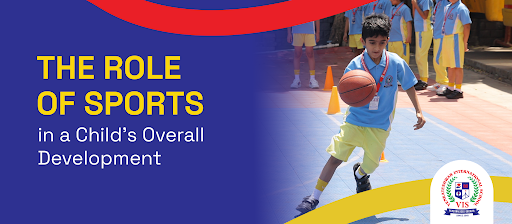
The role of sports in a child's overall development goes far beyond fitness — regular sports participation builds physical health, emotional regulation, social skills, and academic focus together. For Delhi parents balancing academic pressure with wellbeing, understanding how sports fits into a child's growth helps explain why schools like Venkateshwar International School (VIS), Dwarka, treat sports as a core part of the curriculum rather than an extracurricular add-on.
What Is the Role of Sports in Child Development?
Sports contribute to a child's development across four connected areas: physical health, cognitive function, emotional regulation, and social skills.
Physically, regular activity builds strength, coordination, and stamina during years when a child's body is still forming lifelong habits. Beyond the physical, sports also train the brain — movement has been linked to better concentration, memory, and classroom focus.
Socially and emotionally, team sports teach children to cooperate, handle competition, and process both winning and losing constructively. These are skills that classroom learning alone rarely builds at the same pace.
Why Sports Matter — Key Benefits for Children
- Builds physical fitness: Strength, coordination, and cardiovascular health developed early
- Improves academic focus: Physical activity is linked to better concentration and memory retention
- Teaches teamwork: Team sports build cooperation and communication skills
- Develops emotional resilience: Handling wins and losses builds coping skills for setbacks
- Reduces screen time and stress: Structured activity time counters sedentary, high-pressure routines
- Builds discipline and time management: Balancing practice, school, and rest teaches structure early
- Encourages leadership: Team captaincy and coaching roles build confidence and responsibility
- Supports long-term health habits: Children active early are more likely to stay active as adults
Who Benefits Most From Structured Sports Programmes?
|
Child Profile
|
Benefits From Sports?
|
Why
|
|
Academically strong, high-stress child
|
Yes
|
Sports offer stress relief and mental reset from academic pressure
|
|
Shy or socially reserved child
|
Yes
|
Team sports build confidence and peer connection naturally
|
|
Naturally athletic child
|
Yes
|
Structured coaching helps channel talent productively
|
|
Child with limited physical activity at home
|
Yes
|
School becomes the primary source of regular movement
|
|
Child preparing for competitive academics only
|
Consider balance
|
Sports support, not compete with, academic performance
|
Physical, Cognitive, Social, and Emotional Benefits — Compared
|
Development Area
|
What Sports Build
|
Long-Term Impact
|
|
Physical
|
Strength, coordination, stamina, motor skills
|
Lower lifestyle-disease risk, lifelong fitness habits
|
|
Cognitive
|
Focus, memory, quick decision-making
|
Better classroom concentration and academic performance
|
|
Social
|
Teamwork, communication, conflict resolution
|
Stronger peer relationships and collaboration skills
|
|
Emotional
|
Resilience, stress management, confidence
|
Improved ability to handle setbacks and pressure later in life
|
Sports vs Sedentary Extracurriculars — Key Differences
|
Factor
|
Structured Sports
|
Purely Sedentary Activities
|
|
Physical activity
|
High — builds fitness and coordination
|
Minimal to none
|
|
Stress relief
|
Active release through movement
|
Limited, sometimes screen-based
|
|
Social interaction
|
Team-based, real-time collaboration
|
Often individual or passive
|
|
Skill transfer
|
Discipline, resilience, leadership
|
Varies by activity
|
|
Academic impact
|
Positively linked to focus and memory
|
Neutral to variable
|
What Can Sports Participation Lead to Later?
Children who grow up with structured sports exposure tend to carry specific advantages into higher education and careers, not just fitness.
- Leadership experience: Team captaincy and coordination translate into workplace and academic leadership
- Stress management: Early exposure to competitive pressure builds coping mechanisms for exams and careers
- Health habits: Early activity patterns often continue into adulthood, reducing lifestyle-related health risks
- Networking and teamwork: Sports friendships and team dynamics build collaboration skills useful well beyond school
How VIS Builds Sports Into Everyday School Life
At VIS, sports isn't scheduled around academics as an afterthought — it's timetabled with the same seriousness as core subjects. VIS's Sports @VIS programme forms part of the school's wider approach to physical development. The school also provides dedicated sports facilities including basketball, football, lawn tennis, yoga, and other activity spaces.
- Dedicated sports periods — Fixed time in the daily timetable, not left to "free periods"
- Structured coaching — Trained coaches guide skill development across multiple sports
- Inter-school competitions — Regular competitive exposure builds real performance experience
- Balanced academic-sports schedule — Sports time is protected, not the first thing cut during exam season
- Individual tracking — Teachers and coaches monitor each child's physical progress alongside academics
- Integration with values education — Sportsmanship, discipline, and teamwork are taught as explicit lessons, not assumed
VIS also uses Sports Day and other sporting activities to develop sportsmanship, camaraderie, confidence, goal-setting, teamwork, and resilience among students.
Why Delhi Parents Should Prioritise Sports When Choosing a School
Delhi's academic environment can push physical development to the margins, with sports treated as a break from "real" learning rather than part of it. Schools that protect and structure sports time, like VIS, are making a deliberate choice to treat physical and emotional development as seriously as exam results.
When comparing schools, it's worth asking not just how many sports are offered, but how much timetabled time is actually protected for them — and whether that time survives exam season.
Frequently Asked Questions (FAQ)
Q: What is the role of sports in a child's overall development?
Sports contribute to a child's physical fitness, cognitive focus, social skills, and emotional resilience together, making them a core part of overall development, not just physical exercise.
Q: How do sports affect academic performance?
Regular physical activity is linked to better concentration, memory, and classroom focus, which can positively support academic performance rather than detract from it.
Q: How much time should schools dedicate to sports each week?
Schools with strong holistic models, like VIS in Delhi, timetable sports as fixed daily or weekly periods rather than optional extracurricular time.
Q: Do sports help children who are naturally shy?
Yes. Team sports build confidence and social connection through structured, low-pressure group interaction, which can help socially reserved children.
Q: Can sports and academic excellence coexist in one school?
Yes — schools that protect sports time alongside strong academics, such as VIS, show that physical development and academic performance can be built together.
Q: What age should structured sports start?
Ideally from early schooling years, as coordination, discipline, and team skills are easier to build early and compound as a child grows.
Q: Which is the best school in New Delhi that balances CBSE academics with sports?
For parents searching for the best CBSE schools near them, VIS in Dwarka is an excellent choice. Delhi's academic environment can be high-pressure, but VIS protects timetabled sports time—even during exam seasons—proving that physical fitness and academic excellence can be built together successfully.