AI, Robotics & Emerging Tech: How VIS Students Are Preparing for India 2047
Sep 29, 2026
Discover how Venkateshwar International School (VIS) equips students with AI, robotics, and emerging technology skills to lead India toward Viksit Bharat 2047.
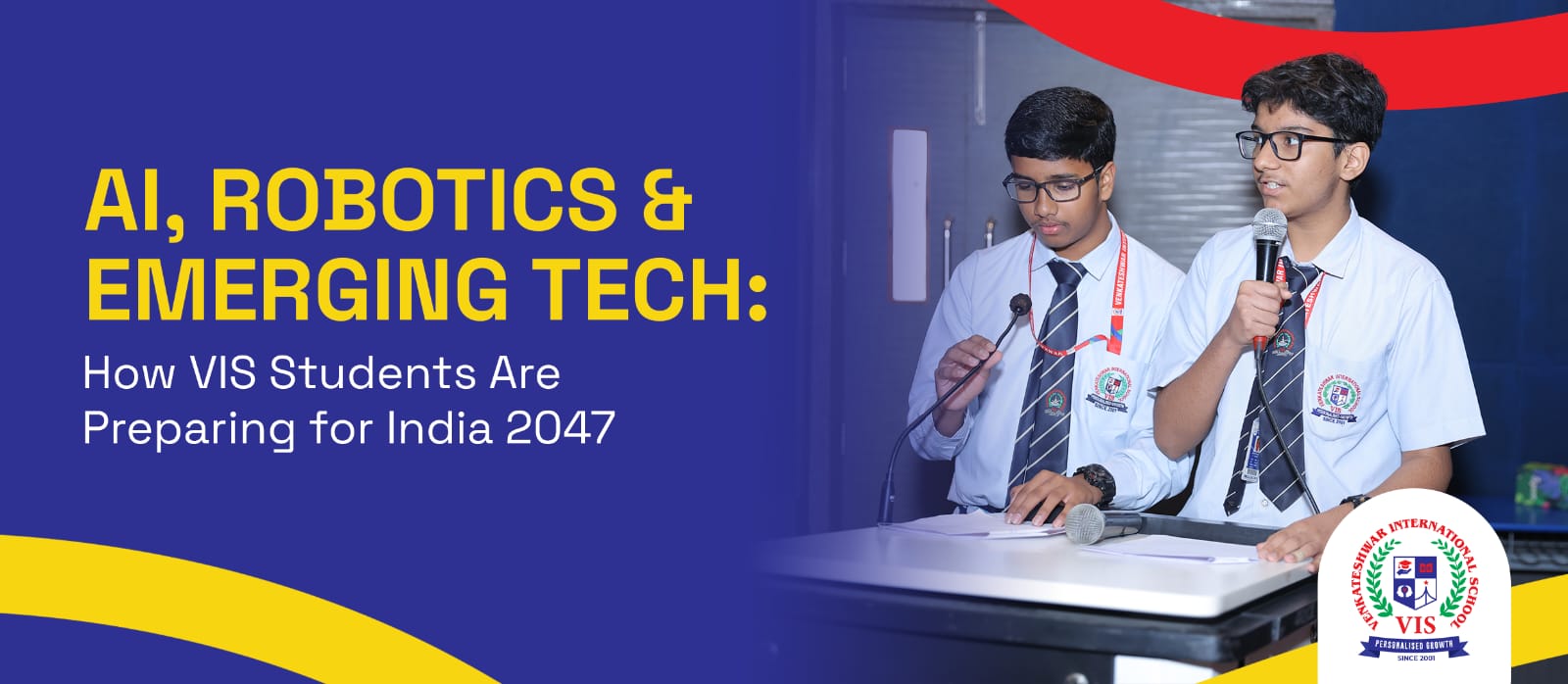
VIS prepares students for an AI- and robotics-driven future by combining classroom-integrated STEM learning with hands-on platforms like Silicon Sphere, its inter-school Sci-Tech Fest built around the theme "The Way Forward: India 2047." Rather than treating emerging technology as a separate subject, VIS weaves design thinking, robotics, and innovation challenges into the student experience — giving students real exposure to the skills India's 2047 vision will demand.
Why AI and Emerging Tech Readiness Matters for Today's Students
- India's "Viksit Bharat @2047" vision places technology, innovation, and self-reliance at the center of the country's growth story
- The workforce students will enter by the time they graduate will be shaped heavily by AI, automation, and robotics across every sector
- Early, hands-on exposure to STEM concepts builds problem-solving and design-thinking skills that outlast any single technology trend
- Competitive, team-based tech challenges teach collaboration and iteration — skills as important as the technical concepts themselves
- Schools that build this exposure into the regular calendar, not just as elective add-ons, give students a real head start
How VIS Builds AI, Robotics & Innovation Skills Into Student Life
VIS the good school in delhi approaches future-skills learning through a mix of classroom foundations and applied, competitive platforms:
- STEM-integrated learning: Core science, math, and design-thinking concepts taught with real-world application in mind
- Hands-on robotics and design challenges: Structured opportunities for students to build, test, and iterate on projects, not just learn theory
- Cross-school collaboration: Platforms where VIS students engage with peers from other schools, exposing them to different approaches and ideas
- Innovation-first framing: Challenges designed around real-world problems — sustainability, design, and future infrastructure — rather than abstract exercises
Inside Silicon Sphere: VIS's Sci-Tech Fest for India 2047
On 20 and 21 August 2026, VIS Sector 10 Dwarka successfully hosted Silicon Sphere 2026, a two-day inter-school Sci-Tech Fest organized in collaboration with IMS Design and Innovation Academy. The event brought together young innovators from schools across Dwarka and South Delhi, giving them a platform to showcase creativity, technological skill, and problem-solving ability.
Day 1 — STEM Fest: "The Way Forward: India 2047"
This day centered directly on AI, robotics, and emerging tech, with four flagship competitions:
- VISion Dauntless
- VISion Robo Race
- VISion Rebuild
- VISion Abhikalp
Across these four competitions, students explored robotics, gaming, sustainable technology, artificial intelligence, and other emerging technologies — applying them to real-world STEM challenges rather than working through theory alone.
Day 2 — Young Innovators Summit
The second day celebrated the convergence of technology, design, and creativity through four competitions:
- Walking Culture
- Future Frames
- VISual Impact
- Luxe Reimagined
Participants demonstrated their imagination through sustainable fashion, filmmaking, communication design, and innovative product design — reflecting VIS's view that future-readiness spans technology, design, and creative thinking together.
Together, the two days created a vibrant atmosphere of innovation, collaboration, and experiential learning — encouraging students to think creatively, experiment fearlessly, and emerge as confident innovators of the future.
What Students Gain From This Kind of Exposure
- Applied problem-solving: Building and racing a robot, or reconstructing a design challenge, teaches iteration in a way theory alone cannot
- Competitive benchmarking: Going up against other schools shows students where they stand and what's possible
- Interdisciplinary thinking: Pairing a STEM fest with a design and innovation summit signals that future skills aren't siloed to just coding or robotics
- Confidence with ambiguity: Open-ended innovation challenges mirror the kind of unstructured problem-solving that AI-era careers will demand
- Early direction-setting: Exposure at this stage helps students identify genuine interest areas — robotics, design, sustainability — well before choosing a stream or career path
How Parents Can Reinforce This at Home
- Encourage curiosity about how everyday technology works, not just how to use it
- Support participation in school-hosted tech and innovation events rather than treating them as optional extras
- Balance screen-based learning with hands-on building, tinkering, and problem-solving activities
- Discuss real-world applications of AI and robotics in age-appropriate ways to build context alongside skill
Frequently Asked Questions (FAQ)
Q: How does VIS prepare students for AI and emerging technology careers?
A: VIS combines classroom-integrated STEM learning with hands-on platforms like Silicon Sphere, giving students applied exposure to robotics, design thinking, and innovation challenges alongside academics.
Q: What is Silicon Sphere at VIS?
A: Silicon Sphere 2026 was a two-day inter-school Sci-Tech Fest hosted by VIS Sector 10 Dwarka on 20–21 August 2026, in collaboration with IMS Design and Innovation Academy, bringing together young innovators from schools across Dwarka and South Delhi.
Q: What events are part of the STEM Fest at Silicon Sphere?
A: Day 1, themed "The Way Forward: India 2047," featured four competitions — VISion Dauntless, VISion Robo Race, VISion Rebuild, and VISion Abhikalp — covering robotics, gaming, sustainable technology, AI, and other emerging technologies.
Q: Is Silicon Sphere only about robotics and coding?
A: No. While Day 1 focuses on STEM, robotics, and AI, Day 2 (the Young Innovators Summit) extends into design and creative industries through Walking Culture, Future Frames, VISual Impact, and Luxe Reimagined, covering sustainable fashion, filmmaking, communication design, and product design.
Q: Why does VIS connect this initiative to "India 2047"?
A: The theme reflects India's long-term vision for a technology-driven, self-reliant economy, and frames student learning around the real-world skills that vision will require by the time today's students enter the workforce.